Saturday, February 28, 2015

Week Eight: SURPRISE!

In 2013, the surprise album became a thing. "This year's most obvious examples are Kanye West's Yeezus, Jay Z's Magna Carta Holy Grail and Justin Timberlake's The 20/20 Experience, but there are also others, like Sleigh Bells, who only gave fans and the press a month's notice that its third album Bitter Rivals would be coming in early October." Most recently, Drake dropped his If You’re Reading This It’s Too Late album. In contrast to films, artists earn a high profit from surprise albums. Growing in popularity, surprise albums will not work for every artist. To try and understand this approach, Eric Ducker got on the phone with Amaechi Uzoigwe, who has been a manager for two decades.
Drake's surprise album cover
Uzoigwe says that surprise albums are both a marketing technique and the reality of how audiences consume music now. He explains that musicians use it because if their album gets leaked it impacts sales, thus promoting and marketing an album months in advance isn’t always the best thing for an artist to do. “[Surprise albums are] an adaption by people on the marketing side to get in front of these things. It can be really savvy and smart, but a very important consideration is that the artist has to already be very established.” He continues to explain by comparing Jay-Z to Four Tet. Jay-Z is a huge superstar while Four Tet has been around forever and has a strong fan base. People know both artist but, if an unknown musician releases a surprise album, it’s compared to having a tree fall down in the forest and no one hears it. When an artist has a brand, surprise albums can be a marketing tool as well as great press. “ It's exciting to people, because everything moves at such a high velocity these days. The enormous volume of music out there also plays a role.”
Amaechi Uzoigwe
Ducker asked, “ If they keep hearing about something, but don't hear it soon, now they're going to lose interest in it.” Uzoigwe responded by say that once the musicians tell press about their album, it's going to get leaked. He emphasizes the fact that it’s inevitable and once an album leaks it’s everywhere. “They don't care if it leaks and destroys your campaign. I'm not saying they don't care in some malicious way, but I don't even think this new generation of music consumer even thinks that way.” Uzoigwe believes that musicians should use audiences behavior as an advantage. In addition, Uzoigwe mentions that surprise album sales are all luck and having good quality music.
Ducker’s question was, if artists, labels and managers were adapting to this or do are they still stuck up on older models? Uzoigwe response was in-between, it depends on age. “The younger artists, they didn't grow up even knowing the old model, so it doesn't matter to them. They're all about immediacy. It's frustrating to them, especially those who end up getting signed by a label who then has a more traditional approach.”

http://www.npr.org/blogs/therecord/2013/10/21/239071510/a-rational-conversation-manager-amaechi-uzoigwe-on-surprise-album-releases

Ducker, E. (2013, October 21). A Rational Conversation: Manager Amaechi Uzoigwe On Surprise Album Releases. Retrieved March 1, 2015, from http://www.npr.org/blogs/therecord/2013/10/21/239071510/a-rational-conversation-manager-amaechi-uzoigwe-on-surprise-album-releases

Sunday, February 22, 2015

Week Seven: The Future Music Industry

 Ten years from now, all major labels will go under and self-publishing and do it yourself labels will boom. "As the internet grows and becomes even more accessible, the tools to do all of the label’s work will gradually shift to the hands of the people." However, this projected idea will only happen if audiences reinvest in the music industry. Not reinvest their money, but reinvest their interest in music. Music became valueless for two reasons: the amount of music online and the quality that musicians are releasing. The abundance of music on online platforms and the amount platforms expect consumers to pay is driving consumers listen to their music on free platforms. While platforms like iTunes has customers pay $15 plus for an album or $1 a song, Pandora or Spotify are free and pay artists next to nothing. "Because there is always more to hear, and to listen thoroughly is either an expensive or illegal prospect, all albums carry less artistic weight and feel more disposable."The quality of music artists are creating are vacuous, and purposeless. Music executives chose hit songs, which win Grammy's and then its off to the next hit single. Executives are trying to make a profit so the more songs they chose to release the more money they make. "Few songs receive widespread audience by emerging from the ground up because the system is no longer organized to facilitate that.The trickle-down industry apparatus has to be flipped and reformatted to match the way that quality music is shared and spread on the Internet and in the blogosphere."
     The newest music and ideas are spread from music blogs. The trend in the music industry are music blogs. Blogs seek new music to share inspiring music. "They have similar intentions to the artists they publicize. Blog traffic is what launches and sustains careers like those of Odd Future, Tame Impala, and Azealia Banks. Label support comes after the fact and does relatively little to further them." In ten years, blogs will be the main method for distributing and promoting music. Musicians may need a publicist but they will not need the resources offered from a record companies. Music executives have to understand that music will never be as profitable as it once was. The industry should make cheaper albums instead of making consumers guilty of not supporting their favorite artist when not purchasing the artists album. Music executives should also release that sharing only a fraction of the profit they make to artists is not a good business model. "Outlawing torrents won't do that much if the legitimate music market continues to be overpriced and inaccessible. People will just find new ways to share music. Torrents do need to be outlawed; I’m convinced of that now. But the music industry’s exploitation of both artists and consumers also has to stop, or we’ll just revert to the toilet state we have now once torrenting is outlawed."

     The music industry has to start working with artists, and not use them as possessions in order to satisfy audiences.  Music should allow artists to record, distribute and profit from their music their way. Executives won't be able to receive profits off of musicians if the industry changes. The predicted music industry will allow artists to produce and release better quality music."It'll also help people realize that musical artistry is something worth paying for, which is what will ultimately allow what’ll be left of the industry to become profitable again."

http://mic.com/articles/28146/what-will-the-music-industry-look-like-in-10-years
Barnes, T. (2013, February 27). What Will the Music Industry Look Like in 10 Years? Retrieved February 22, 2015, from http://mic.com/articles/28146/what-will-the-music-industry-look-like-in-10-years

Friday, February 13, 2015

Week Six: Music Thinking Skills

    "Did you hear Blank's new album," and "Oh My Gosh this song is my jam," are popular sayings teenagers use when talking about music. "Teenagers listen to an average of nearly 2.5 hours of music per day." They spend more time listening to music then they do watching TV. Artists as well as their music play a massive role on the very persuasive teenager. 

     According to a new report by The Archives of Pediatrics and Adolescence Medicine, 1 in every 3 songs teens listen to use drug or alcohol references."Studies have long shown that media messages have a pronounced impact on childhood risk behaviors." Teens can't stop musicians from writing about drugs or alcohol but their different tastes in music saves some while destroying others. Researchers at the University of Pittsburgh School of Medicine conducted a study using 279 songs released in 2005. This research shows that 9 percent of pop songs, 14 percent for rock songs, 20 percent for R&B and hip-hop songs, 36 percent for country songs and 77 percent for rap songs had lyrics relating to drugs or alcohol. "The study authors noted that

music represents a pervasive source of exposure to positive images of substance use." 
     I think that artists have a choice to use their music as a positive or negative influence. But, I understand that teens are also peer pressured into participating in drugs and drinking. I think that every musician has a choice and there's no way to change it. Music is following trends in society and right now having a WILD time is one trend.

http://well.blogs.nytimes.com/2008/02/05/under-the-influence-ofmusic/?_r=1
Under the Influence of...Music? (2008, February 5). Retrieved February 14, 2015, from http://well.blogs.nytimes.com/2008/02/05/under-the-influence-ofmusic/?_r=1

Friday, February 6, 2015

Week Five: Marketing Plan-The Future (3 of 3)

     So far, the greatest marketing plan has consisted of an artist having a strong online presence and how to release new music in the most effective way. This part in the marketing plan is about the future. An artist second plus record sales depend on how relevant they stay in the present. Musicians should change it up after new albums such as adding merchandise. It is important for a musician to keep putting music videos out and maybe even a tour. This part of the plan is all about music, social media, and performing live.
     "Gone are the days of releasing an album once every couple of years and leaving it at that, today’s artists need to be constantly feeding their fanbase new music." Releasing new music keeps their audience engaged. For example, Austin Mahone, an artist from Florida who has released zero albums, but has sang plus or minus 69 songs. This nineteen year-old has almost 8 million follows on Twitter and has 5.5 million on Instagram. Artists don't need to release only new work, they can sing a cover, or create a mixed tape of one song, and it will still keep their fans interested. "Please note, to legally sell a cover song artists will need to obtain and pay for a mechanical license." 
     The smartest investment an artist can have is to have social media. Even when taking a break, musicians should ALWAYS be on social media- most importantly Instagram, Twitter, and Facebook. Musicians should also keep up with their newsletters. In this newsletter, artists should talk about similar things that were on their social media but with more details or something completely different. Newsletters are influential because it keeps musicians fans in the loop. 
     Artists should continue to tour and travel. If their is a problem and artists can't travel internationally or even to a specific place musicians could do live streams. Live streaming is just like FaceTime but musicians can't see their fans. On the other hand, they can read fans comments live. It is a solution to interact with their fans. Using social media artists can tell their fan base what time their doing the Live stream and how to get to it. Each live stream, if an artist choose to use, should be different from the last. They can play games, sing covers, have guests on their "show". Their guests could be a singer, or a friend and family member. " The goal of all this activity is to get people excited so they are telling their friends about the upcoming release and will buy it the minute it’s available!"

http://cyberprmusic.com/2014/10/24/musicmarketingplan-3/
The Musician's Guide to Creating an Effective Music Marketing Plan (Part 3 of 3) - CyberPR Music. (2014, October 24). Retrieved February 7, 2015, from http://cyberprmusic.com/2014/10/24/musicmarketingplan-3/

Friday, January 30, 2015

Week Four: Marketing Plan- The Launch (2 of 3)

     The first part of this marketing plan was for an artist to have a strong online presence. The second part is about how an musician can create a successful new release launch.
     It is important for an artist to realize that digital distribution can spread their music faster then a physical CD or selling MP3s on the artists website. Music is for the fans. Digital distribution allows a musicians music to be available when and where fans want it, 
ewfwefwenobody has the same preferences! Some will prefer streaming the album like Spotify and some will buy it permanently on platforms like iTunes and some will go to a digital distributor like CD Baby. However, musicians need to be careful and not sign up on too many, one is an acceptable amount. They want their song to be available but not have multiple copies of the same album on all the digital retail stores.This is another reason for a musician to have a strong online presence. 
     The album is just the beginning. "The release of the actual music itself is one big event, and this album/EP as a whole represents your main content that will be used in an effective launch campaign." To support the release, going on tour, creating a music video, and designing merchandise are many assets artists should use to draw attention to the release. Musicians should reach out to press and share information with their current following to help spread the word.                                                                                                                             jhbWhen releasing albums or EPs, artists should have a tour booked.  The artist can either do a international tour that goes around the world, a national tour that goes around the United States or a mini tour that is regional. Going on tour will help with an artists press. Local newspapers are more likely to talk about new music if the musician is coming to that specific town. When an artist has a list of tour dates, audiences view them as credible and that the artist is active and working hard to promote their career.                                                                                                                             
     "A music video that is captivating, colorful, funny, interesting (the list goes on, but you get the idea) greatly helps with a press campaign." Creating a exclusive premiere on a website will generate a buzz on social media. On the other hand, while giving the music video before dropping an album helps with promotion, so will releasing it a month or two after the album comes out. This method will build awareness. At least one official music video needs to be made for an album, more than one is preferable. The concept of creating an official music video is to build a fan base and to grab listeners attention. 
      Merchandise is a fans and artists best friend. Fans love merchandise because it supports the musician, and shows that they went to their concert. Artists love merchandise because they make money, and it is promotes them. When deciding on what merchandise to sell, artists should listen to their fan base. If their fan base loves shirts- they should create some shirts. If their fan base loves jackets- they should definitely create some jackets. However, if a musicians fan base isn't sizable, then they should not sell merchandise, only to be most cost effective.                                                               ljkj  When promoting a new album or EP, an ample component is the artists press campaign. The musician can either use a public relations company, also known as PR, or do it themselves, also know is DIY. When using a PR company, musicians should look for ones that fit their music. The company should have a thought out plan to promote the artist. Little details about musicians can push a campaign into the spot light. Artists should talk more about hobbies, preferences, and family stories.        
                 Your pre-luanch timeline
Two Months Before Release
  • Press campaign begins
  • Release a single, a great way excite your fans and also to get some current press quotes to include when contacting press about the full length release
  • Reskin social media profiles to advertise the new release
  • Get your newsletter firing and tell fans you have a special announcement
One Month Before Release
  • Announce pre-sale campaign through your newsletter and social media networks- create bundles of merch to sell for extra boost
  • Set up a Facebook invite for the new release, send it to all your Facebook friends and post on your Fan Page
Two Weeks Before Release
  • Keep the excitement going, hold a contest to win a copy of the new album and/or tickets to the release show
Official Release Day Activities
  • Write a news post about the release on your website or blog
  • Update Twitter and Facebook with an “album out now” post and link to where they can purchase it  (I suggest you pay to boost post so people see it!)
  • Send out a Newsletter to your mailing list
One Month After The Release
  • Service press with official music video and announce tour dates
The Musician's Guide to Creating an Effective Music Marketing Plan (Part 2 of 3) - CyberPR Music. (2014, October 7). Retrieved January 30, 2015, from http://cyberprmusic.com/2014/10/07/musicians-guide-creating-effective-music-marketing-plan-part-2-3/

Friday, January 23, 2015

Week Three:Marketing Plan- The Online Presence (1 of 3)

     A marketing plan is very important for an artist. Artist work long hard hours writing and practicing songs and spend tons of money recording and mixing the songs. As a reward, artists should have a thorough plan on how to sell it. With todays technology, an artist should make a online presences. "Time and energy needs to be spent building a strong online presence in order to be taken seriously as an artist for when the time comes to start actively promoting." There are tons of places online that artist make an appearance on, but the most influential: official website, a Twitter, a Facebook and YouTube. "An artist needs to be working many different angles and taking many different approaches to get seen and heard."
     An official website, no matter how famous the artist already is, is crucial. The artist website needs to be functional and modern. "The music industry is built on appearances." The website should have a spot where people can listen and buy music, but not a player that plays automatically when a person lands on your site, a news section to keep fans in the loop about whats new, and a newsletter sign-up with an incentive such as discount on merchandise or a free song. Also, a link to the artist social media accounts is recommended. It is important to NOT substitute social media for a website. 
     Twitter is the best platform to help an artist build a following. Artists should follow everyone: friends, musicians, producers, club owners etc. Since Twitter has no following limit, artist should follow other artists with similar sounds. Similar sounds means similar tastes which means that they could like the artists music. On a Twitter account, it gives the option to upload a picture for a cover photo and a profile picture. For the cover photo, an artist should upload a picture that says something about that particular artist and their music. The cover photo is a secret advertisement. " 
A simple solution is to use a publicity shot with text on top of the image that promotes anything on the horizon like single, EP, or album releases, new music videos and tour announcements." Artist should tweet daily, and choose different topics such as career news (which should be no more than 20% of your output) to your interests, passions and hobbies. If an artist is looking for responses, news, politics, sports, culture are great topics to get their audience to engage.
     A Facebook Fanpage has a pay-to-play reality to get maximum exposure. To look professional, an artist should have daily posts on their Fanpage. "Posts that are not just text will have a greater chance of being seen, so share photos and links as much as possible and ask questions to increase engagement."The cover page on a musicians Fanpage has the same effect as the Twitter cover photo, use it as an advertisement! On your Fanpage, three apps should be installed: artist profile, a store and a mailing list sign up form. 
     YouTube is a very powerful platform where artists are getting seen and discovered. With music being the number one type of content being streamed, YouTube is the first place millions of people worldwide go when they’re looking for online video. It is a necessity for a musicians channel to look professional. On a musicians channel, there should be a branded cover image and links to their other 
social media profiles so people can connect with the musician across different platforms. For the actual music video themselves, it is fundamental that the artist name is with the music video title, for example, 'Taylor Swift-We Are Never Getting Back Together.' The tags musicians chose should be adjectives that describe the musicians music and similar artists as keywords with an artist name also being a keyword. Under music videos, there's a description box. In the description box, artists must tell viewers what they are watching and provide links to other content they own, such as their website and iTunes, where they can go for more music and learn more about the musician. 
     'Hello, you've got mail!' Newsletters are the easiest way for a musician to keep their fans up-to-date. Once a month, musicians should write letter regarding all things them. This letter is where artists see the biggest impact on sales. 

http://cyberprmusic.com/2014/09/10/musicmarketingplan-1/
The Musician's Guide to Creating an Effective Music Marketing Plan (Part 1 of 3) - CyberPR Music. (2014, September 10). Retrieved January 23, 2015, from http://cyberprmusic.com/2014/09/10/musicmarketingplan-1/

Friday, January 16, 2015

Week two: The Times They Are A-Changin'

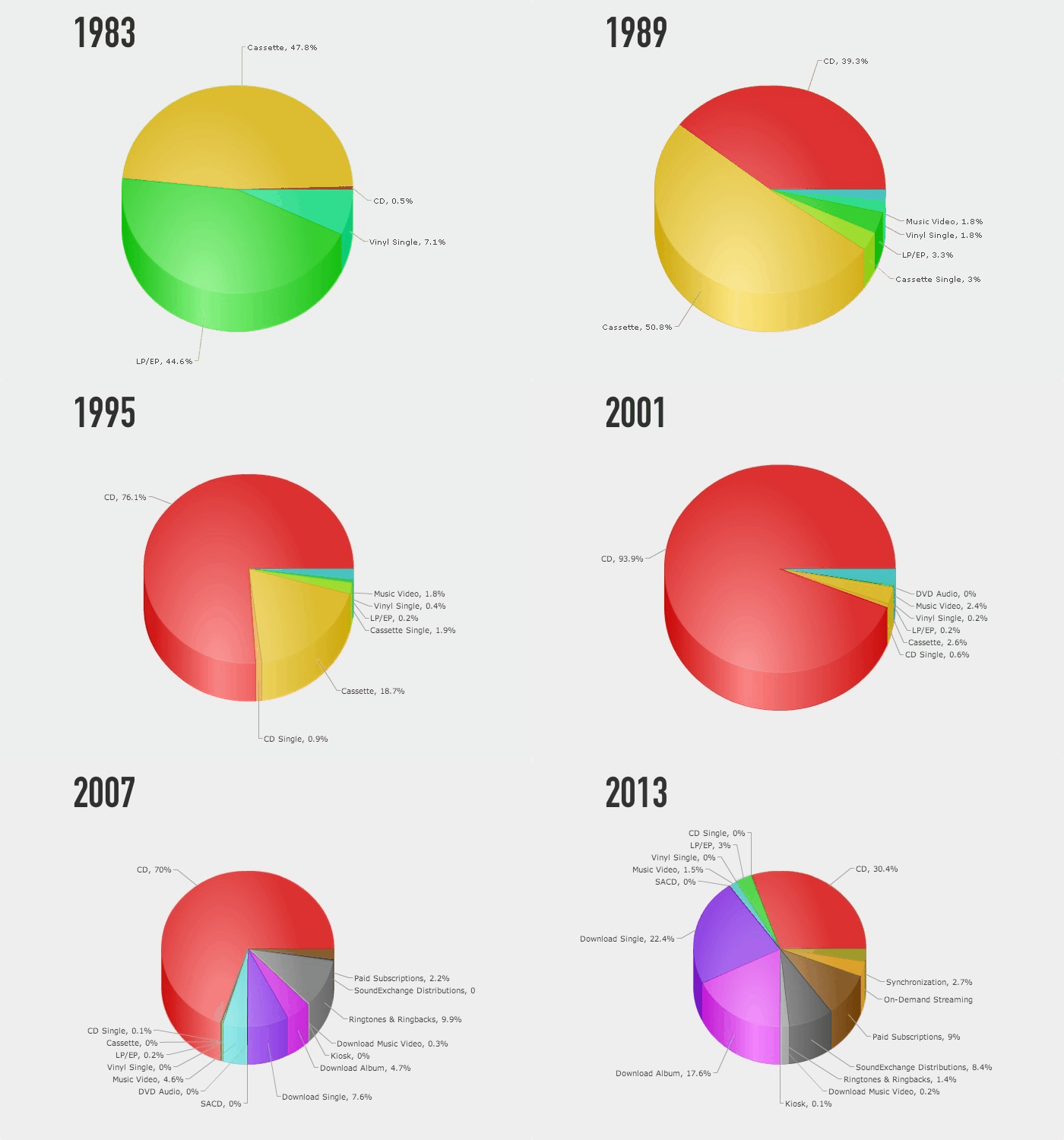
          The music industry has gone through makeovers many times in the past decades. In the 1980's, music was distributed through compact disc. Then came vinyl, then came cassettes and so on and so forth. But now with the digital age, music distribution is mostly online or accessed through apps. In the last several years, there has been a 7 to 10 increase in sales of subscriptions for streaming. According to the International Federation of the Phonographic Industry, the music industry's digital revenue grew to $5.9 billion dollars in 2013. "The IFPI also reported that digital downloading remains a key revenue stream for the industry. Downloads account for 67 percent of digital revenue, said the study." However, that doesn't mean that the physical music formats like CDs are dead, in 2013 51.5 percent of all global music revenues came from physical music platforms. Robert DiFazio, a faculty in Columbia’s Business 
Distribution trends of the last 30 years
& Entrepreneurship Department, has said that one of the biggest changes the industry has endured is that consumers can download one particular song instead of buying an entire album. With distributors offering consumers to buy one song instead of the whole album, the amount of money artists receives have also changed. "'It’s a lot more difficult to make your living off the sale of your recorded music products unless you are in the rarefied air of an artist who is widely recognizable,' DiFazio said. 'Becoming a recognizable artist is what most people want, and profiting from the sale of your recorded music product on your way to becoming recognizable is almost impossible.'" 
   Throughout the years, technology has improved and has grown world-wide. From here, it can only get better.Understandably, the revenue from digital distribution has went sky high from all of the different streaming outlets available. However, there is evidence to prove that physical platforms aren't "dead and gone." And I believe that they never will be. Some people just like the tangible feel of a CD. And some people are just old fashioned and like a hard copy.

http://www.columbiachronicle.com/arts_and_culture/article_c72b6a24-5101-11e4-953c-001a4bcf6878.html

Downloading, subscription services changing music distribution. (2013, October 13). Retrieved January 16, 2015, from http://www.columbiachronicle.com/arts_and_culture/article_c72b6a24-5101-11e4-953c-001a4bcf6878.html